The perforated iron plate (holds the magnets in place)
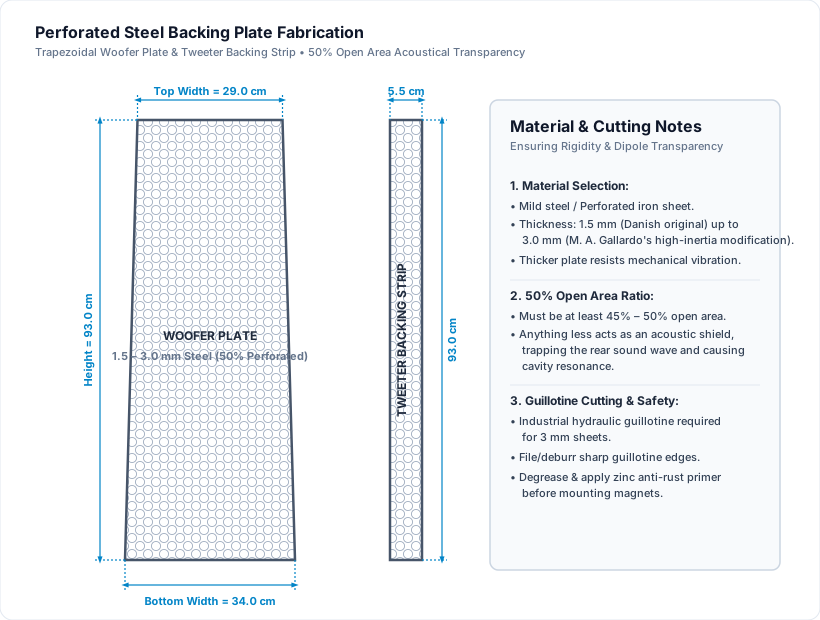
The magnets do not float in mid-air; they are held by their own magnetic attraction on an iron plate. As the loudspeaker works as a dipole, emitting acoustic pressure in both directions, the plate must be perforated—permitting sound reproduction without destructive rear-cavity reflections.
The plate is cut into pieces:
- One big trapezoidal piece for the bass baffle: In my case, 93 cm in height, 29 cm in the top part, and 34 cm at the widest bottom part (see diagram above).
- One piece for the back and sides of the tweeter hole: A long 93 × 5.5 cm piece, with long strips to line the inner sides of the tweeter aperture, permitting adherence of the tweeter magnets (2 × 93 cm strips by the width of the MDF frame).
Plate Thickness & Perforation Specs
You can choose plates that range from paper-thin to very thick. I chose 3.0 mm thickness—this was as wide as possible mostly with respect to my pocket ($$…) and heavier than the original Danish project (1.25 mm), with 50% air (open area).
A thicker plate makes the construction more robust, with less propensity to resonance, making the loudspeaker all the more sturdy to help achieve a cleaner overall bass.
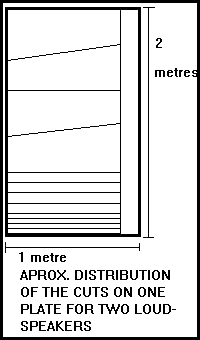
The thicker the plate, the tougher it is to find a place that can cut it. I had a hassle finding an industrial pneumatic/hydraulic guillotine that could cut 3 mm steel. The plate also weighs a lot, so a vehicle is a must. They normally sell steel plates in 2 × 1 meter sheets, which gives you enough material to cut backing plates for a stereo pair with extra to spare.
Safety & Finishing Tip: Give the plate an antioxidant treatment (zinc anti-rust primer or powder coat) so it lasts a lifetime. It is also essential to file/deburr the edges after cutting—guillotine cuts leave razor-sharp burrs that can easily slice skin or tear delicate Mylar film.
Original Prototype Sketch