
The Definitive Guide to Building Planar Magnetic Speakers
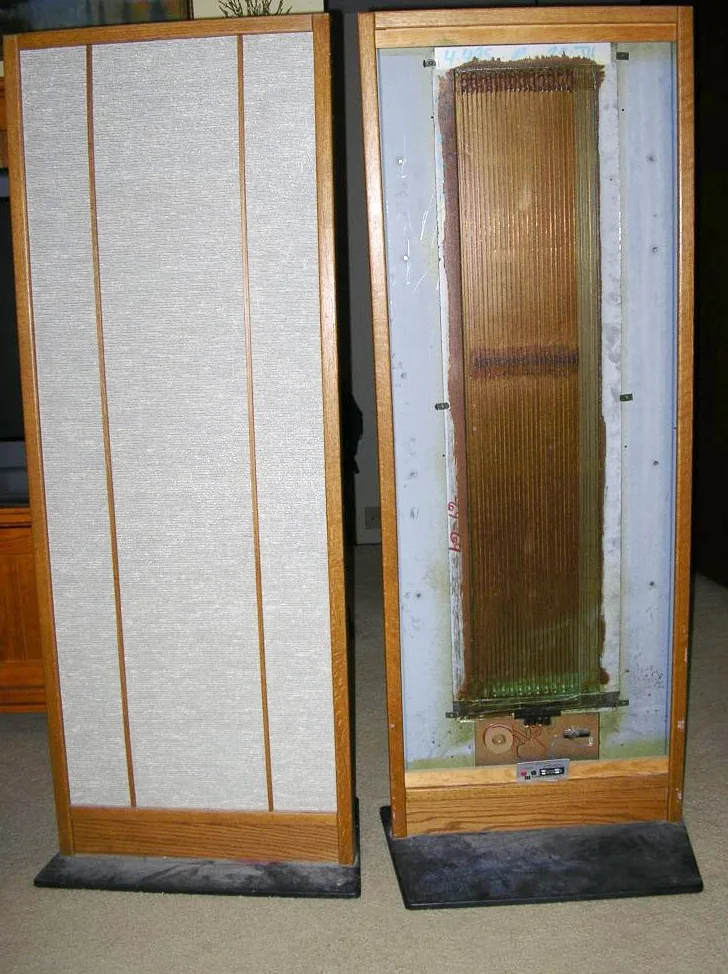
Zero box resonance. Uncolored dipole sound. A battle-tested 4-stage construction manual based on Ole Thofte’s 1989 Danish La Folia, documented from real-world prototypes by M. A. Gallardo.
Why Planar Magnetics Outperform Dynamic Cones
Traditional speakers trap sound inside a resonant box and push cones from a tiny voice-coil point. Planar magnetics drive the entire surface in open air.
True Acoustic Dipole: No Enclosure Coloration
When a speaker driver moves backward in a sealed box, it compresses internal air and bounces off wooden walls, coloring the audio. Planar magnetic dipoles breathe freely into the room front and back, rendering instruments with breathtaking three-dimensional realism.

Zero Cone Breakup Distortion
Heavy paper or polypropylene cones bend and flex under rapid audio transients. The La Folia’s serpentine voice coil is bonded directly across the entire membrane—the drive force is applied uniformly everywhere at once.
Linear Neodymium Magnetic Matrix
Alternating North-South polarity bars focused behind a perforated steel backplate maintain a uniform, linear magnetic flux across the entire excursion range.
Trace Resistance Estimator
Adjust foil conductor length to preview nominal impedance:
Harmonic Air & Extension (>30 kHz)
A corrugated aluminum strip suspended directly in high-strength magnetic gap delivers lightning-fast transient snap without voice coil inductance.
The 4 Stages of the Build
Structured sequentially from raw timber to sound output
Conception & Sourcing
Theory, history, and gathering raw materials
Frame & Magnetic Chassis
Woodworking, steel plate cutting, and magnet grids
Diaphragms & Conductor Traces
Membrane tensioning, foil routing, and ribbon corrugation
Crossover, Tuning & Reference
500 Hz network, active DSP options, tips, and FAQs
"Just do it. Don't worry about the details—deal with them as you go along."
In 1990, M. A. Gallardo recalled the Danish loudspeaker project from Copenhagen. Ignoring skeptical advice from local electronics experts, he built mini-models using cardboard frames, kitchen plastic foil, and chocolate-wrapping aluminum foil connected to a willing NAD 3300 amplifier.
Out came sweet, uncolored high frequencies—proving that reference-grade dipole sound can be achieved without spending tens of thousands on commercial boutique speakers.
Read Chapter 02: The Personal Experience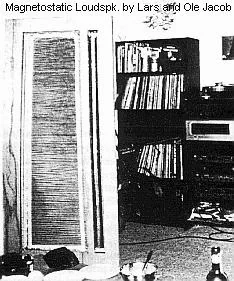
Begin Building Your Planar Magnetic Loudspeakers
From calculating conductor foil widths to tensioning Mylar and winding 500 Hz passive crossover inductors, everything is documented with exact metric measurements and real-world audio lessons.