
The Aluminium L-Profiles (plate support)
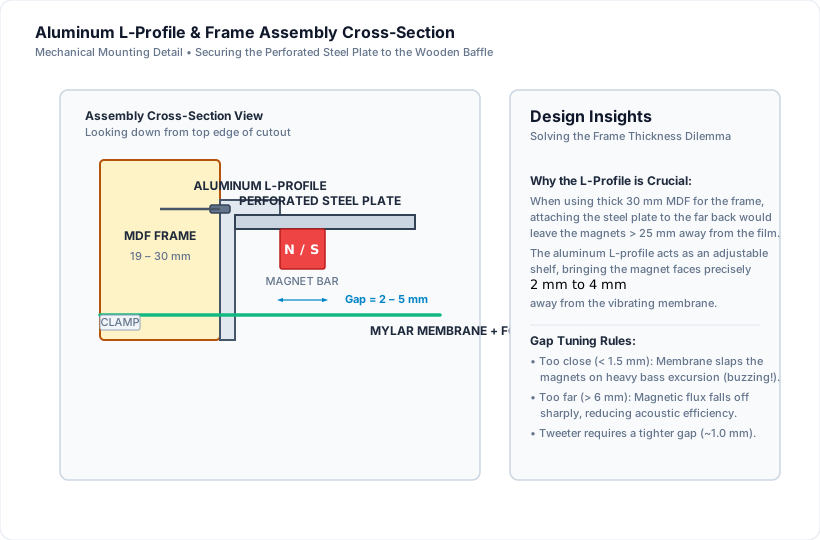
You will have to figure out the exact L-profile dimensions you need based on your chosen frame thickness and magnet depth.
Remember to account for the aluminum profile’s flange width when you cut the hole for your perforated plate.
This was the mechanical solution I engineered to solve the design challenge I encountered when I chose to use a very thick (30 mm) MDF board as the frame for the loudspeaker:
- If the perforated plate were screwed directly onto the rear face of a 30 mm board, the magnets would sit more than 20 mm away from the film—far too distant for effective flux coupling!
- By mounting aluminum L-profiles along the inner frame perimeter, the perforated steel plate is suspended inside the cutout like an adjustable shelf.
- This brings the magnet faces to the exact desired gap: 2 mm to 4 mm from the vibrating Mylar membrane.
Frame Thickness Recommendation
With modern hindsight, I now recommend going for a somewhat thinner wood baffle (19 mm – 22 mm, closer to the original Danish design). The air mass moved by the ultra-thin membrane and its low intrinsic weight does not necessitate 30 mm MDF, especially since the bolted steel plate itself provides massive structural rigidity.
Once you have your magnets and membrane, choose the frame and profile dimensions so you can securely sandwich the magnets between the membrane and iron plate.
Original Prototype Sketches
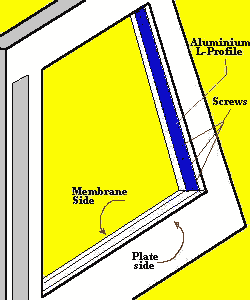 Figure 1: L-profile mounting concept
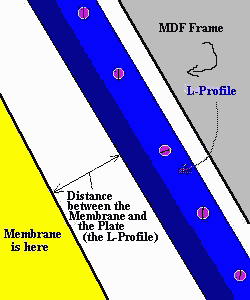 Figure 2: Inner frame positioning